Wednesday, January 9, 2019

Merry non-Christmas!

In the spirit of un-birthdays, merry non-Christmas to you!

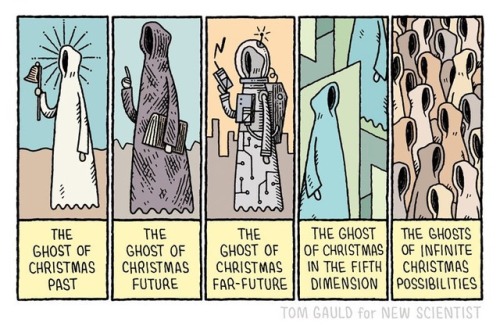
Today's a pretty unexceptional day, so it's a great time to contemplate the infinite possibilities happening in parallel universes not our own.
Cartoon by Tom Gauld


This post's theme word is pernoctate (v intr), "to stay up all night", or "to pass the night somewhere." I passed the time with phantasms of present, past, and parallel realities, pernoctating while pondering possible payoffs.

Monday, January 7, 2019

Family joy

'Tis the season to ritually retreat to the place of your birth (or at least wherever your strongest familial anchor is) and Spend Time Together. Hooray!

An upwelling of goodwill and warm familial emotional comfort to you, to me, to all of us. Here in my snowy childhood retreat, I am surrounded by snark and sotto-voce comments and offhand references to literature and clever puns about math and it is like being immersed in a warm, soft pool of almost-mirrors of myself. In the least egotistical way possible, it's delightful and I love all these people intensely.

Here are some amusing and mostly out-of-context snippets of the family holiday season, which as usual, extends well into January.

"Every pushup is like 10^{-6} points. It's like mining Bitcoin."

"There's a microbrewery like every 3 blocks in Ithaca now." (originally tweeted)

Re: wisdom teeth and roommate
"Sarah won't let me decorate with them."
"First strike."
"She's a sensible girl."

Alert: we've had to unfurl the backup cheese board for auxiliary cheese feasting. (originally tweeted)

"Shitty superpower: the Man who Makes Women Menstruate. ... maybe there was a local election. A school board election? Those happen every year."

"If you just WATCH me do the chores, it doesn't count towards your chore wheel, Jayjay."
"Lila, usually dogs don't HAVE a chore wheel." (originally tweeted)

"I know there's a cure for hepatitis C, but there's no need to jump headlong into it."

"You might think there is a time signature. There is not."
"This is a seal attempting to play an electronic harmonica. Underwater."

"These tights are the #1 bestseller in beekeeping supplies!"
"Beekeeping tights are NOT a thing."

Suave pickup line, delivered slimily: "You might not know this, but the real numbers? They're ordered."

"What the hell is that thing, Ernie?"
"It's hair containment. You might not be familiar."

Regarding his own conception: "I'm sorry, that was the best sperm I could get, Andrei."

"I don't see the sloths."
"The sloths are right in front of you!"
"Those are 100% rhinos."
"Oh, yeah."
(originally tweeted)

"My boobs are so low now, they can't hold anything up."

Attempt and failure at generating a pithy saying: "If wishes were fishes, then... dishes... would... britches?" (originally tweeted)

"He's bludgeoning the cheese into slices."

Someone left on Google voice assistant, which chimed in, unexpected: (originally tweeted)
"Can I help you find something?"
"Find the yeti!"
(it did not oblige)

"Isotropic pressure!" (re: hats) (originally tweeted)

On e-shopping as you fall asleep: "... it's very hard to get the best price." (originally tweeted)

"Just think, if that had been a rink, you'd be wearing sequins to work." (originally tweeted)

... now, back to work, one and all!


This post's theme word is exeleutherostomize (v intr), "to speak freely." The pithy, flippant people exeleutherostomize when amongst family.

Monday, December 31, 2018

Fall semester 2018 quotes

There are giant, luxurious expanses of whiteboard in my office. They go almost floor-to-ceiling, which means that there is a considerable margin above which I cannot feasibly write. This margin ends up getting filled with quotes that students hear or say in my office, and find amusing to document. Occasionally I add to it myself (on a stepstool, on tip-toe).

The semester is over, so I'm clearing the whiteboard. Here for posterity are the quotes, anonym-ish-ized:

"I think I am approachable and friendly but no one puts a quote like that up there."

"I'm allowed to extend social niceties. It is one of the things that helps me blend."

"I'm an old-fashioned maniac trapped in the body of a thirty-year-old professor."

"Because long story short I'm a freak."

"Having a filter is like being the protagonist in everyone else's life."

"Solving problems is for lesser beings."

"I was hedging my bets so that way I would get something happy."

"I thought the population of America was like 200,000." (<-- astonishment="" board="" for="" on="" p="" quote="" the="" this="" value="" went="">
"You are the most accessible professor by far." (someone said this to me!)

"Thank you, wise professor." (someone said this! first usage of "wise" applied to me AFAIK)

"You harvest tears, I harvest souls, we all have our quirks." (delivered in a flippant tone to me)

"Try not to say anything obviously dumb." (actual direction I was given)

"It's not all bleak."
"It's just mostly bleak."

"So you're going to be THAT professor?"

"I will, in future, NOT ask questions. Just remain silent." (said by the Most Inquisitive Student)


For those keeping track at home, the semester timer finished at 45:23:04.52. I'm considering how to invoice this time.


This post's theme word is scrouge (v intr), "to squeeze, press, or crowd." The office hours scrouge is the scourge of the studious and enthusiastic.

Wednesday, December 19, 2018

Final exam

Now shall we sit and observe how collective test-taking anxiety slowly and palpably fills the room.

You know that recurring, popular nightmare, where you suddenly realize that you have a final exam today and you

  • forgot to study?
  • forgot to attend the class?
  • forgot to drop the class way back in week 1 of the semester?
  • don't speak the language?
  • don't set an alarm?
  • look at the exam page and the words and symbols swim before your eyes and you can't make sense of anything at all?
That nightmare is no better from the other side; now it's just a nightmare of the form "what if I oversleep and show up late to my own exam?" I am a more nervous test-giver than I ever was a test-taker; more than my own performance is at stake. Is there such a thing as secondhand test anxiety?

So I will sit here, quietly, and answer questions for several hours in my most calm and composed façade of professorial authority and serenity.
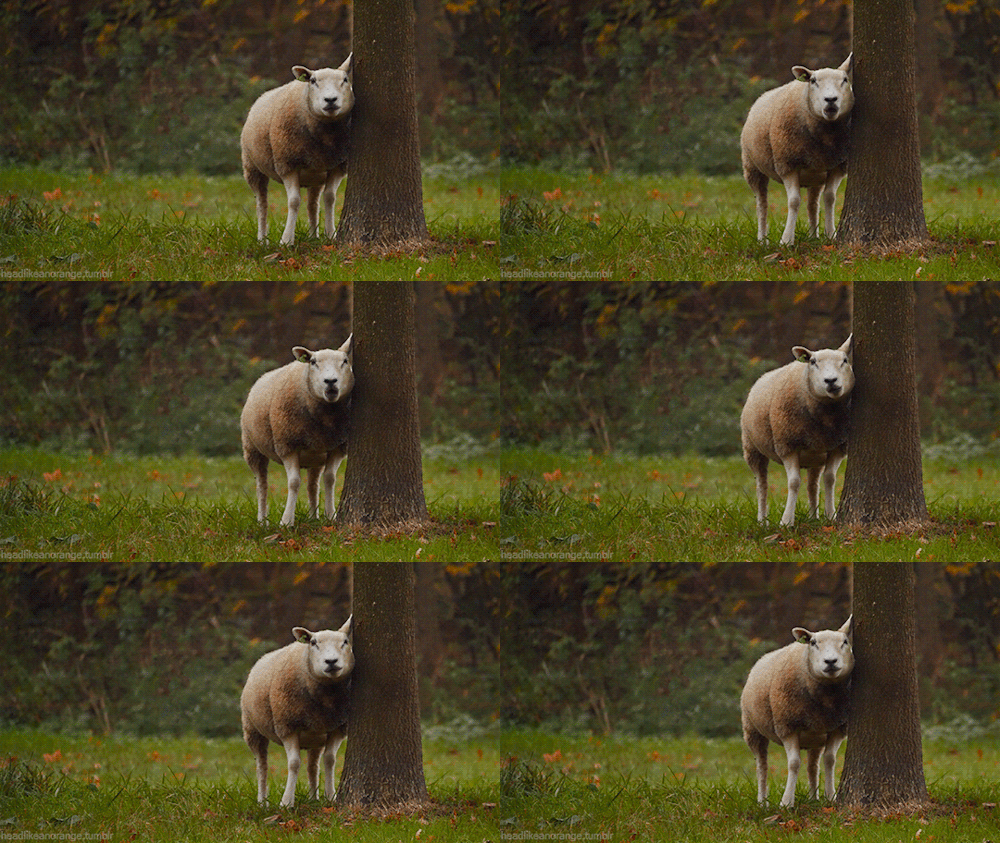
HT: Head Like an Orange on tumblr

This post's theme word is ovine (adj), "of, relating to, or resembling, sheep." And now we process into the examination room, ovine and orderly.

Friday, September 21, 2018

Renée Elise Goldsberry

Renée Elise Goldsberry gave a concert this evening at Swarthmore. It was free but "sold out" so quickly that the concert got doubled to meet demand in the Swarthmore audience.

It was delightful.

She sang a varied selection of songs --- yes, including getting the audience to sing along with songs from Hamilton --- and interspersed them with snippets of talking about the songs, their genesis, and why she picked them.

One of her stories was about going to see Maya Angelou and remembering no particular specifics of what she said, but only the feelings generated by seeing Maya Angelou speak. In that spirit, I say: this performance was a lovely, carefree step away from the usual cares and niggling worries of life to simply enjoy live music, words and notes flowing together and performed with beautiful skill.

I have a lot of live music coming up in the next week, I am looking forward to all of it.


This post's theme word epanalepsis, "a figure of speech defined by the repetition of the initial word(s) of a clause or sentence at the end of that same clause or sentence." The best music is played by musicians who are best.

Thursday, September 6, 2018

License to Quill

The premise of Jacopo Della Quercia's License to Quill is that Shakespeare is actually James Bond. The book attempts to fuse these two genres; it reads a lot like a writing exercise where the assignment was "a story clearly identifiably by tone and plot but with all the verbiage and styling of a different genre."

On the face of it, this is a premise I find appealing; however, it palls after awhile and did not really develop its own voice. There was nothing drawing me in, particularly, so I declare reading bankruptcy on this book at page 137 of 367. Oh well.


This post's theme word is anadiplosis, "the repetition of a word or words in successive clauses in such a way that the second clause starts with the same word which marks the end of the previous clause." The premise was interesting; interesting is not how the book turned out, for it leaned heavily on tired tropes and failed to use anadiplosis.

Wednesday, September 5, 2018

First-week-of-class nightmares

I dreamt I was walking along the street, and police officers drove by and shot the person I was walking with. I didn't know what to do to help. Thanks, brain, for this channelling of being mystified by the systems I must work inside. Plus reading the news. This dream was disturbing.

I dreamt I was visiting a friend in Toronto, and Canada got nuked. We became pedestrian refugees of a senseless attack. All the other pedestrian refugees were very nice, of course, but it wasn't clear where we should walk or who would help us when we got there. Or if the border was even open?
Thanks, brain, for this channelling of a feeling of powerlessness and despair, with generous helpings of the news, plus some flavor added from Station Eleven by Emily St. John Mandel. This dream in no way constitutes spoilers for the book, or indicates any hostility towards Canada.

I dreamt I was called up for jury duty, and when I went, it was held on the top of a cliff. As I climbed the tenuous, slippery staircase, the final section of railing pulled out of the wall in my hands, and I slipped... and caught myself! On the cliffside. Which was not very grippy, so I briefly hung there, thinking "well, let's see if all that climbing helps me now...", then fell to the bottom of the stairwell, which started inside a building (unroofed, evidently). I managed only to sprain my ankles, but the person (also a professor!) behind me on the stairs dislocated one hip, broke the other leg, and had various spinal injuries.

While we were in the hospital, still in the dream, we were anxious that we would be penalized for missing jury duty. Then also the other professor was considering: if you sue the courthouse for injuries you incurred while attending jury duty, how will that be adjudicated? Thanks, brain, for this channelling of anxiety about fulfilling my adult responsibilities, with a little added bonus of "your hobbies are idle and won't help you in an emergency". (Double-added bonus for "and now I can't get back to sleep", which I will combat by "fine, then, let's start the day right now".)

Professors get anxious, too.


This post's theme word is tenesmus (n), "a distressing but ineffectual urge to defecate or urinate." Having a nightmare? Throw in some tenesmus for fun!

Sunday, June 24, 2018

Incredibles 2

Any fool attempting to see the Incredibles 2 movie this weekend quickly found that it was sold out, hours in advance, at all internet-ticket-selling theaters. Unfortunately, all us fools discovered this when we tried to walk into the theater and buy a ticket for an imminent showing. (One wiser fool in my party knew of a not-internet-ticket-selling theater, which is where we ended up seeing the movie.)

I went dressed in costume, and I watched family after family be turned away at the door. Truly, a heartwarming scene for supervillains. (My costume was noncommittal on the good/bad axis.)

This high demand was probably predictable. Other things that were predictable:
  • major plot points hinged around Bob (Mr. Incredible) keeping secrets from his wife Helen (Elastigirl) AGAIN
  • poop/farts played for jokes (it worked: the theater was full of kids who laughed at that)
  • the supervillain is a completely non-magical normal person AGAIN
  • the supervillain's goal is to destroy the credibility of superheroes AGAIN
  • the supervillain is a super-smart technology inventor AGAIN
  • plot repeatedly discusses super-suits, and super-seamstress Edna gets several quippy scenes AGAIN
  • a character was motivated by the murder of their parents AGAIN, DISNEY? WHYYYY?
  • public opinion fully reversed several times during the movie
  • plot twists fully predictable to anyone above the age of 10
I liked that there was a subtle moment where a responsible person changed baby Jackjack's diaper mid-action-sequence. Blink and you'll miss it, but it happened.

I also liked that the message of the movie, which will maybe sneak in to the heads of children who repeatedly watch it, is that technology is easy to use to manipulate people, and we should all be aware of that when we use it. The movie explicitly says this, a few different times (mostly supervillain monologues, but still... true).

The movie tried to wink at adults by having plot points and jokes revolve around reversal of stereotypes, but there were just as many setups that relied on tired stereotypes, so for me this was a wash.

Also, a quibble of reality: this is a world with lawyers and class-action lawsuits against superheroes. How is it not also a world of insurance against superhero-level property damage? The characters explicitly discuss getting insurance for the damage their rescues incur. This problem is not very interesting, should be fully solved, and ... for the sake of authorial integrity... why is insurance being used as a motivator in this movie? Insurance and murdered parents are the new Disney tropes.

Overall it was cute and fun, of course, because the style is still adorable, cartoon physics permits anything, and at several points, people wield a laser-eyed baby and say "pew pew" to make him shoot lasers out of his eyes.


This post's theme word is zetetic (adj), "proceeding by inquiry, search, or investigation" or (n) "a skeptic or inquirer." I am a delighted but zetetic movie-viewer.

Tuesday, May 29, 2018

Gameshouse

Claire North's trilogy of novellas The Serpent, The Thief, and The Master, all focus on a mythical "Gameshouse", a gambling institution which travels magically from city to city, endures through time, and exerts a strange pull over all humanity. But over our main characters firstly, lastly, and most of all.

The first book, The Serpent, focuses on Thene, an unhappily-married woman in 1610 Venice. Her introduction to the Gameshouse is through her dissolute husband, who gambles and drinks away all his money in the "lower games" part of the club: the usual gambling games, poker and card games, betting on other things, and so on. Checkers. Coin flips. (Battleship, Monopoly, and Diplomacy, once the stories reach the present day.) Thene first follows her idiot husband there, but soon becomes involved in the games herself, and rises to our notice by being smarter at playing games than the rest of the rabble.

One intriguing thing about this novella is its use of person: it is told in the third-person sort-of-omniscient, except for frequent intrusions of first-person into the narrative. This collusive tone of "we now turn to look at..." is as if the narrator is drawing back a curtain on the next scene, and implicating the reader in some of the voyeurism involved in chasing down the parts of this gambling-addicted, high-stakes (literally) tale. The thing I did in the last sentence of the previous paragraph? That's exactly the tone.

Thene is invited to play "higher" games by the mysterious, cloaked figures (inevitably called "umpires") who adjudicate the games. In particular, she is invited to play at a game of "kings", which amounts to meddling in local politics to get her "piece" (a person) elected to the post of Tribune (top of the political heap in Venice). The rest of the story devolves by playing on the tropes of real life as a game: she is dealt cards, each card representing one person who she can use as an asset to influence the election, collect information, spy, steal, kill. The game has rules but those rules are few and not particularly scrupulous. It's a short story about politics, and gender roles, and being cold and calculating with even your own life; the tone is mysterious and compelling. (I find all of Claire North's writing to be hard-to-put-down, intricately crafted, brilliant; see previously.)

The second book, The Thief, maintains the same tone but steps up the silliness of the "magical timeless gambling house that secretly controls all people's lives" by being mostly about a game of hide-and-seek. Yeah, that's right: high stakes hide-and-seek. It's adult-league: guns and spies are involved, as well as police bribery, survival skills, and general action-movie levels of cleverness and desperation under pressure. Just as in The Serpent, there are a few scenes where the main character Remy, a French-English expat in 1938 Thailand, interacts with a mysterious yet powerful fellow games-player known only as "Silver" (actual name gambled and lost many millennia ago). We, the readers, get the clear sense that Silver is playing a long-term game, gradually accreting favors owed from other long-lived game players, in order to play some even larger and more momentous game. By the end of the novella, it is clear that Silver is our first-person narrator, and that he has been building these tales to explain the board, the pieces, and the rules of the game he will play.

The third book, The Master, focuses on this game: Silver challenges the mysterious-in-the-extreme Gamesmaster, "the woman all in white who guards the halls wherein we play" (p. 6), who has appeared at the fringes only as an entirely-white-robed-and-veiled figure adjudicating previous games. All high-level players --- Thene, Remy, Silver, the Gamesmaster --- are effectively immortal, as the Gameshouse allows people to gamble years of their lives, or chronic illnesses, or memories, or "your perception of the richness of the colour purple" (The Thief, p.102). So what stakes are possibly interesting to these immortal, calculatingly clever, unstoppably lucky people? Silver doesn't quite ever make it clear until the final scene, but his objections to the Gameshouse are clear. While players may think that they are powerful, unseating local governments or swaying elections or sinking actual battleships in their games, Silver's suspicion is that they are all being used in a larger game, one in which the Gamesmaster shapes human history towards a particular path. He can't tell what it is, and no one else can either, but the objection to being a piece in someone else's game is strong.

The plot of The Master revolves around a game of chess, but the line between the game-as-metaphor and game-as-literal-life is the most blurred of all three stories: each player is the "king" on their own team, and the game is a series of "moves" which could just as well be cut scenes in a Bourne or Bond action film. The board is the entire planet. The goal, of course, is to capture the other king; people are pawns, militaries are knights, and overall the metaphor is taken right to the edge of overdone and intolerable. Over the course of the story --- which happens in present-day, or maybe just-future-tomorrow --- the entire world descends into chaos, as the competing players draw on contacts in various militaries and governments to attempt to capture each other, bomb each other, create and destroy social movements with the goal of imprisoning the other, etc. The action ratchets up in increments but overall is hyperbolically done; with throwaway lines about how World War I was simply a quick round of some silly game between small-time players, it is clear that this game is insane, and also unstoppable.

All very believably and compellingly told. Claire North continues to be a writer with a direct line into my brain; her words are like the hooks side of velcro, and I am caught.

My only qualm is this: often the players use favors they have accumulated from normal, non-immortal people who just have a gambling problem. They seem to have these favors in unlimited supply. How? Those people are turning over at least once every century, so to maintain a world-wide collection of favors owed, high-level Gameshouse players would need to be constantly touring the globe and playing frivolous-to-them games against plebians. We see in the stories that they don't enjoy doing this... yet they must have.

A lot of plot digest and not a lot of reflection on my part, here. I love Claire North's writing. She has really perfected the art of slowly laying out breadcrumbs of plot, of gradually unfurling a bizarre and unexpected premise. Bravo all-around.


This post's theme word is hypercathexis (n), "excessive concentration of mental energy on something." Taking advantage of his opponent's hypercathexis during this round, Silver sneakily gleaned the information that allowed him to win the game.
Saturday, March 17, 2018

Dear Evan Hansen

Dear Evan Hansen is a recent Broadway musical, focused on themes of connectivity (digital, interpersonal) and isolation (same). See previously.

It continues to be a triumph of theater, an incredible and carefully-constructed mirror of reality which is so achingly accurate that it shakes its audience with their own feelings of isolation and desperate loneliness.

Plus I like music, and words.

D. and I saw it from excellent seats --- front center of the balcony --- and the perspective, the separation of audience from stage, completely vanished in the immediacy of the drama. It feels real, it feels like watching reality, and actual interactions between characters with the depth and conflicts of real people.

It still made me cry; there were pauses in the action where, in the silence between lines, the sound of the entire audience softly weeping could be heard. So I was not alone. (Major theme and repeated leitmotif: "you are not alone".) I liked having D. there to bounce theories and analyses around; he went a bit further than I did, finding a Greek-style framing device in the first and last scene, but who can blame him? I think a little analysis helps scab over the raw, shredded feelings that the musical elicits.

This post's theme word is bavardage (n), "chattering; gossip." The cacophony of bavardage that is surround-sound twitter/instagram/youtube/blogs is effectively overwhelming, whether staged or naturally experienced.